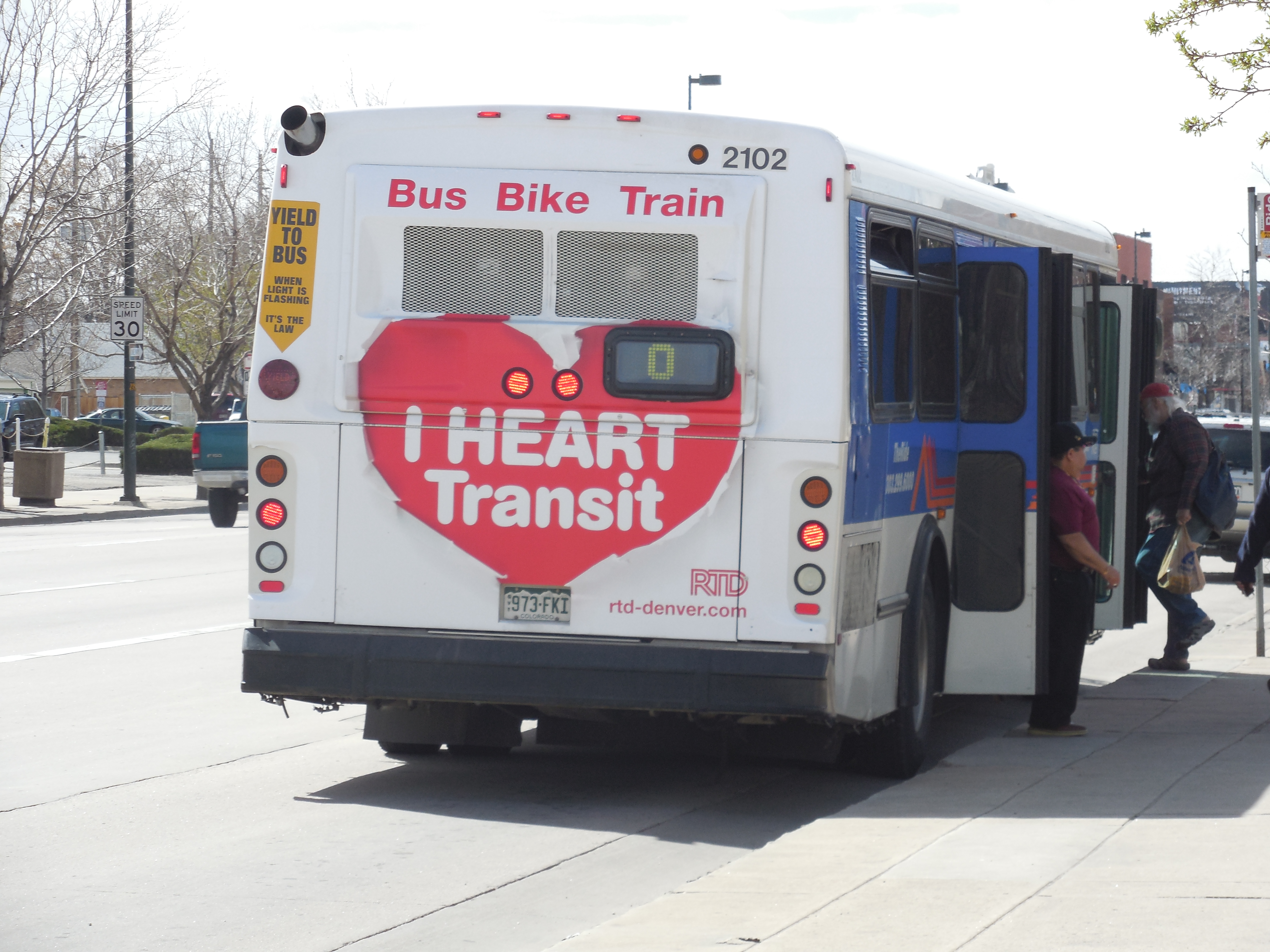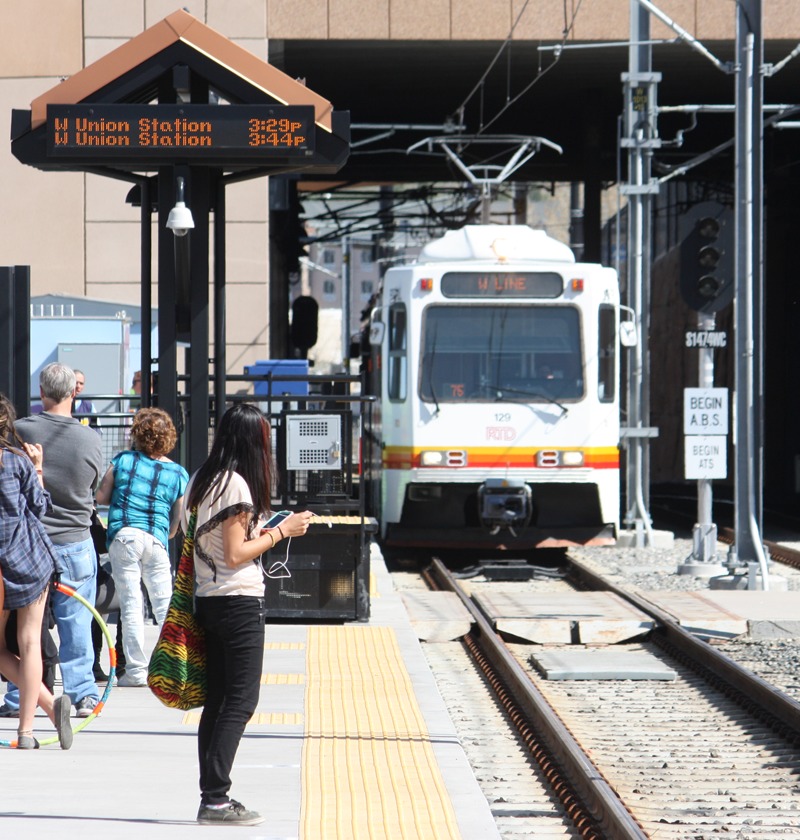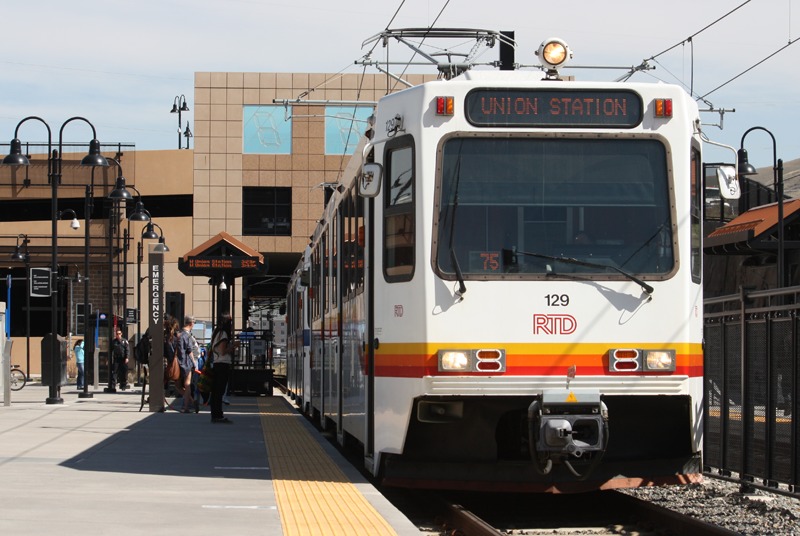

O’Toole: RTD is sinking; stop rearranging the deck chairs
The most important step is to make any future taxpayer subsidies to RTD proportional to outputs, not inputs.

The most important step is to make any future taxpayer subsidies to RTD proportional to outputs, not inputs.

Local control is becoming a thing of the past in Colorado — along with your right to vote.

Governments and central planners love rail because it guarantees a monopoly.

This is really a demonstration of one of the evils of government ownership of transportation and other marketable services.

Denver’s Regional Transportation District (RTD) suffers from numerous problems that can be traced back to its rail construction projects.

The supermajority of Democrats in the legislature has an opportunity to prove they have a modicum of human decency and ethics by not double taxing victims of natural disaster

One thing you can be certain of: an increased focus on mobility as Flynn and DRCOG define it will leave the region’s drivers increasingly immobile.

Highways are more resilient than transit because they don’t require billions of dollars in operating subsidies.

Most of the increase in August was due to the recovery from the pandemic, not to free transit.

When the chemically addicted, mentally ill start camping out in rail cars and buses they might chase away riders in the same way they’ve chased people out of downtown.

It’s unfortunate that voters aren’t more interested in RTD since it’s ranked the fourth largest government in Colorado, with a budget that rivals that of the Colorado Department of Transportation (CDOT).

If RTD truly is key to solving so many serious problems, then we must be doomed.
DENVER–The Bureau of Land Management’s (BLM) quarterly oil and gas lease sale in Colorado generated over $8 million, the most successful such sale the federal lands agency has enjoyed in recent years. The BLM, as well as energy policy experts credit the successful lease sale in large part to the Trump administration’s pro-energy production policies.
According to its recent press release, the BLM on March 31 leased 68 parcels of federal land for drilling in Colorado, generating $8.1 million. Over 42,000 acres were leased across Weld, Jackson, Routt, Arapahoe, Delta, Mesa, Rio Blanco, Gunnison, and Garfield counties.
This sale was conducted with lower royalties embedded in the One Big Beautiful Bill Act(OBBB), which reduced the royalty rate of onshore oil and gas production on federal lands to a minimum of 12.5%. Previously, the royalty rate sat at 16.67% under former President Biden’s Inflation Reduction Act.
“The One Big Beautiful Bill Act reduces the cost of doing business on public lands, making oil and gas development more economically attractive to industry,” the press release reads, predicting that the sale will spur on additional leasing and drilling.
The BLM sale is also congruent with Trump’s day-one Executive Order 14154 ‘Unleashing American Energy,’aiming for energy dominance and increased domestic drilling.
Amy Cooke, Director of the Energy and Environmental Policy Center at Independence Institute, a free market think tank in Denver (as well as publisher of Complete Colorado) says that the surge in Colorado leases is a sign that energy markets are responding well to energy friendly policy.
“The size and scope of the lease sale are a clear signal that markets are responding to both stronger price conditions and the shift in federal policy toward energy abundance under President Trump, Energy Secretary Chris Wright, and Interior Secretary Doug Burgum,” Cooke told Complete Colorado. “For the first year of the Trump administration, an abundant supply kept oil prices low for consumers. As prices have risen, producers are doing what markets are designed to do: invest in new production.”
Cooke predicts the new drilling will help Colorado’s energy sector back on its feet, as production has declined over the last several years due to significant new restrictions on energy development put in place by a Democrat-controlled legislature and Gov. Jared Polis.
“What’s important to note in Colorado is that all these leases are on federal land. It’s where investors are comfortable putting their money,” said Cooke. “That’s because state regulation has made it increasingly difficult to permit new wells on private or state property, effectively stifling new production.”

Colorado’s Electric Utilities join a new RTO. What are the sources of power coming from, and what will that mean for the state and ratepayers? PowerGab Hosts Jake Fogleman and Amy Cooke discuss this and more.
Show Notes:
https://i2i.org/colorado-joins-the-southwest-power-pool-now-what/
https://x.com/SimonMahan/status/2039723579294527581/photo/1
https://leg.colorado.gov/initiative_files/1343/download
Because the grid could use a backup plan.
Yes, we’re giving away a Predator Generator.
No, this is not a drill.
Yes, it’s because reliability apparently isn’t fashionable anymore.
Starting with the first show of 2026, drop a funny, clever, or pithy comment in the show’s comment section.
That’s it. No forms. No fine print to initial. No ESG questionnaire.
At the end of the session, we’ll select our top 3–5 favorite comments.
Then you vote on the winner.
Democracy still works here. Mostly.
Winner announced on the last show in May 2026.
One comment.
One generator.
Because when the grid wobbles, satire won’t keep your lights on — but a Predator Generator will.

What if outside organizations could place their own people inside government? We break down a little-known Colorado scheme where privately funded staff are embedded within the legislative process—raising serious questions about transparency, influence, and who’s really shaping policy behind the scenes. Is this harmless expertise… or something more?